COMMON

#223 Flignog

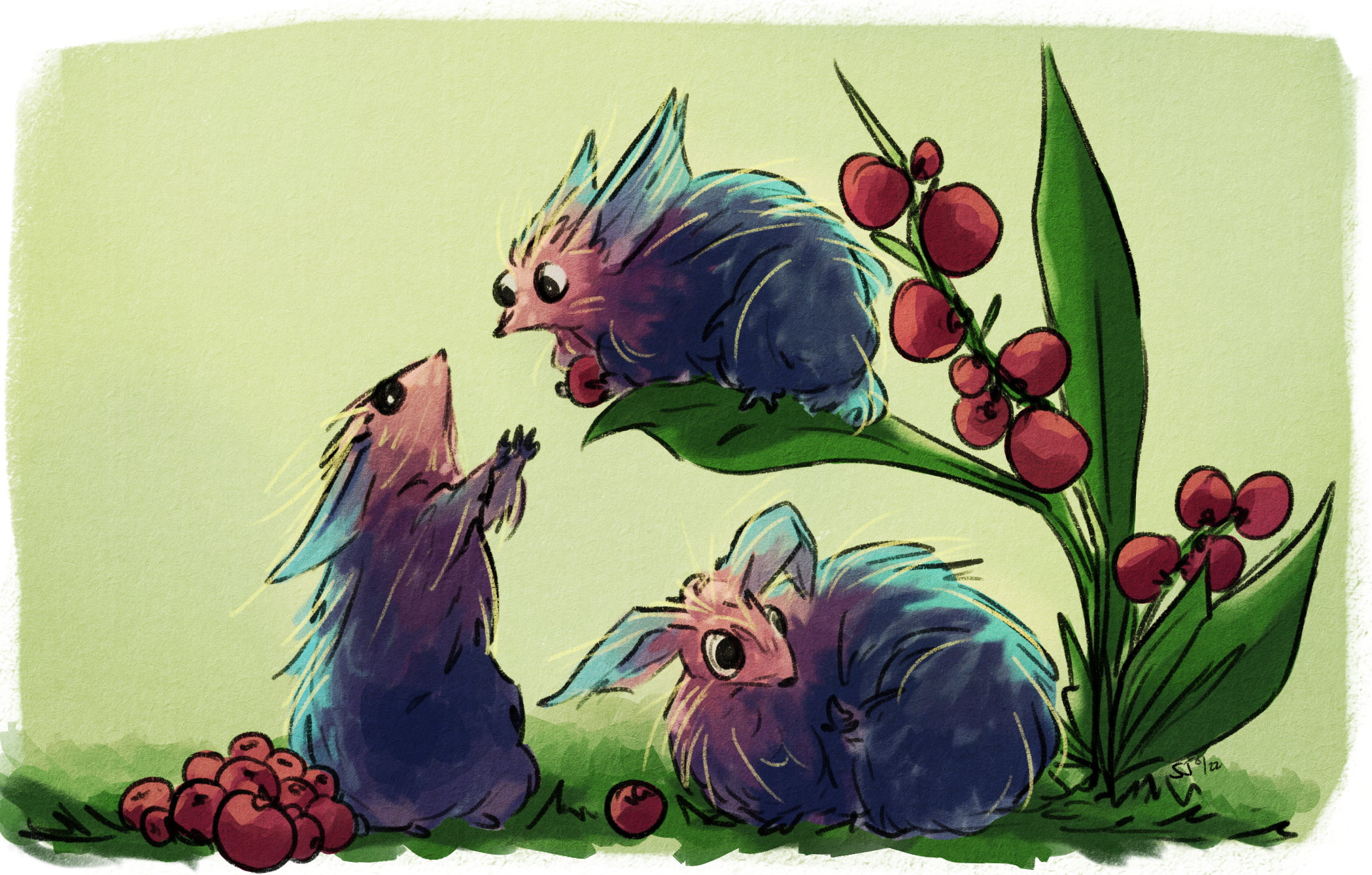
Flignogs are small, furred creatures that can usually be found in trees, grasslands, and caves. They often band together in small tribes, and are known to "bray" at each other to communicate. They are omnivores and spend much time hunting small animals and gathering fruit. They have also grown to enjoy the "brayberries" of the braytree, which flignogs often collect and bury in secret troves for later.
Release Date August 07, 2022
Sign up for a free account to claim this creature as your own.

by ninja
♥ 5

Discover other creatures

Explore an endless universe of ficticious life on NovelGens.

COMMON

#025 Baibi

This small monkey navigates long distances by utilizing the bug-like wings on its back and can commonly be seen flying from forest to forest during the day. Their silhouette in flight mimicks those of birds, but birdwatchers with an eye for what t...

RARE

#186 Jaunwix

The rare jaunwix is a hypermaterial metafeline whose origins are unknown. This creature's body flows like water, babbling through brooks and trickling through crevasses like a river, filling whatever space is available. This unstable shape takes t...

UNCOMMON

#170 Hevvet

Hevvets are intelligent, house-sized horse-like creatures that frequent the snowy tundras and far north. Hevvets were historically unfriendly creatures—aggressively attacking anyone near their homogenous cities—until a large war broke out in the r...

UNCOMMON

#176 Vilcino

Vilcini are tiny creatures that are easy to see from afar due to their bright purple color. They live in grassy fields and forests and spend most of their time eating insects, nuts, and berries. The best place to find a vilcino is in a field where...

COMMON

#195 Blatheraxe

Blatheraxes are shapeshifting eels that live in the deepest depths of the ocean. They are able to stretch physical appendages from their malleable body and have been known to creatively lure curious divers to their deaths. Adult blatheraxes are ty...

UNIQUE

#374 Panileaf

A rare incubating leaf. When hatched, it's roots suck up all the nutrients in the soil and destroys the plants around it. These plants hatch a hundred years after they are taken out of their mother plant. The size of the leaves depends on how fa...