COMMON

#255 Squirmpod

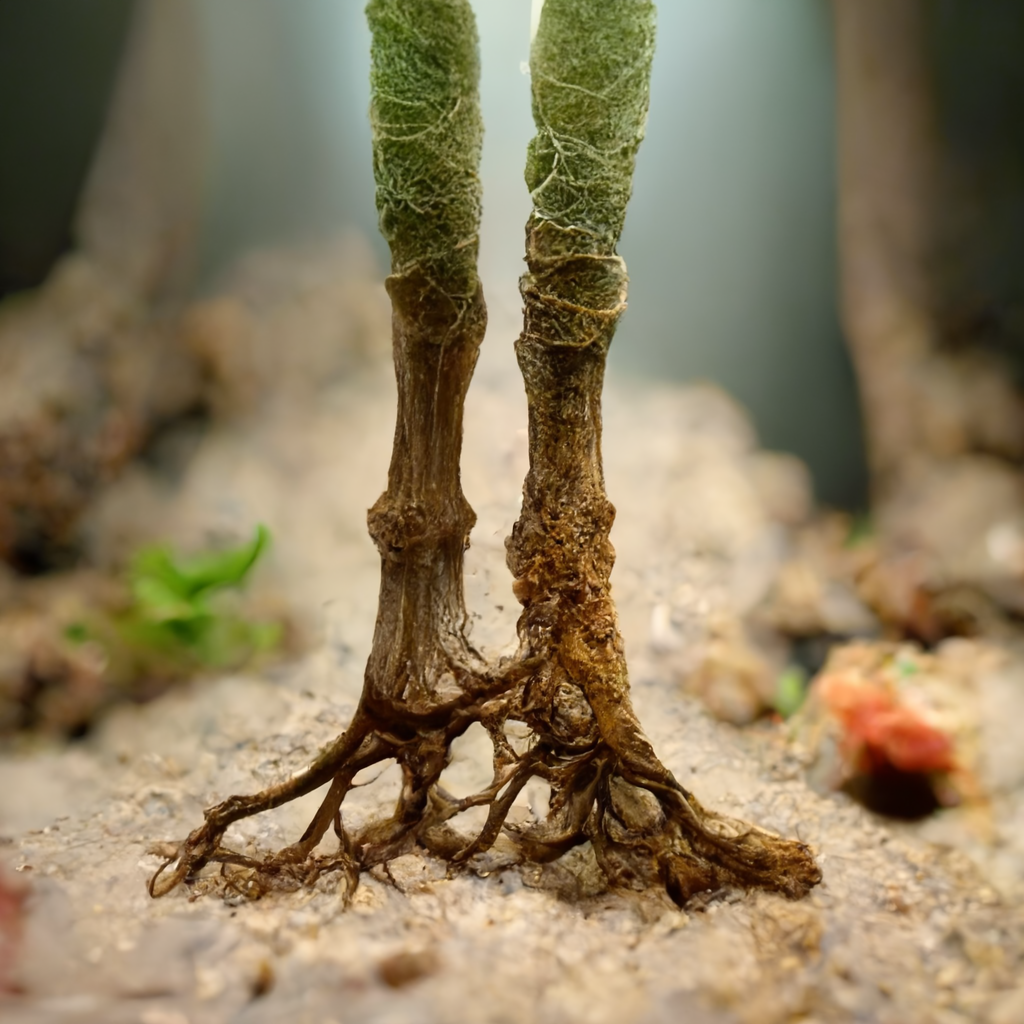
Squirmpods are large, plant-like life forms often found in or around the greater rainforest regions. They are about the size of a small human and appear like a giant tree sprout, with a gray-brown trunk and a dark green, leaf-like canopy sprouting from the top that squirmpods passively absorb ambient nutrients from. Despite their stumpy appearance, they are surprisingly very fast and agile. To get around, they bend their trunk backward, quickly growing a new leg at the base of the trunk and leave their old leg behind. These broken-off leg sections will quickly grow roots of their own into the soil and become a new squirmpod to continue their species' rapid proliferation.
Release Date September 08, 2022
Sign up for a free account to claim this creature as your own.

by Hood
♥ 1

Discover other creatures

Explore an endless universe of ficticious life on NovelGens.

UNCOMMON

#245 Golden Chotlack

The golden chotlack is a small mammal that used to live in the jungles and woodlands of the planet, but has since wholly migrated to caves underground. It is known for its nocturnal habits, its ability to use echolocation, and its ability to weave...

COMMON

#070 Cycti

Cycti are an artificial race created by infusing gorilla DNA in a spliced cactus-bramble plant that evolved sentience and intelligence only a year after inception. Now, they roam the deserts with armies of sub-humans blindly following their vast i...

COMMON

#147 Herling

The herling is a small bird about the size of a housecat. They are mostly harmless, but are often pests because of their tendency to steal and hoard shiny objects. A herling will take any object that catches their eye, including jewelry, coins, pe...

COMMON

#359 Nadraghb

The nadraghb are extradimensional beings that physically resemble earthly raccoons in appearance, but that's where their similarities to any creatures on this planet end. Nadraghb seem to freely manipulate spacetime, allowing them to move at super...

RARE

#191 Sabbi san

Sabbi san are a phylum of four-legged microscopic tardigrades first described by Austrian zoologist Robby Saab in 2195, who discovered them in a tainted cave water sample. Sabbi sans move quickly in water or on land with a gait that closely resemb...

RARE

#322 Ungarmel

When a creature is near, an ungarmel on the prowl will curl up in a ball and hover above the ground, doing its best to blend in with the environment in order to catch its prey unaware. When the time is right, the ungarmel will attack by releasing ...