UNCOMMON

#026 Oroch

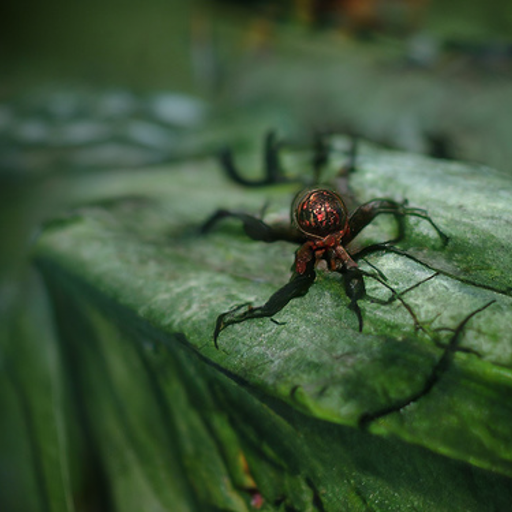
Orochs are more closely related to an octopus or squid than any known spider species, yet are commonly mistaken for spiders. Luckily, their bright-red color serves as a loud warning of how deadly orochs can be due to the way they hunt. Once they've locked onto a target, some orochs can spend weeks following and studying a prey before they strike. The only known deterrent is to leave out a small platter of blueberries, which orochs love.
Release Date January 22, 2022
Sign up for a free account to claim this creature as your own.

by Andrew
♥ 1

Discover other creatures

Explore an endless universe of ficticious life on NovelGens.

UNCOMMON

#193 Udeneth

The udeneth is a large, light-colored creature that somewhat resembles a llama. It has no ears or nose and must rely on sight and touch to find its food. Udeneths are found on mountainsides where they frequently burrow into the snow, where they wi...

COMMON

#073 Pinbin Snake

Pinbin snakes are totally harmless, almost-friendly creatures. They eat grass, lick rocks for fun, and rarely grow more than a foot long. Their eyes are a delicacy among the rich.

UNCOMMON

#156 Salnodist

Salnodists are water-dwelling reptiles that hunt by inching slowly towards their prey and trapping them in their mouths before they can escape. The lower jaw is supported by a flexible bone that allows for a larger mouth. They have no eyes, and in...

COMMON

#219 Flailx

Flailx are oddball "fish" that photosynthesize their oxygen from the sun, severely limiting the nautical areas they may call home. However, flailx are extremely adept at holding their breath for long periods of time (sometimes for days!) and will ...

UNCOMMON

#251 Gorgolasa

Gorgolasas are giant carnivorous spiders with very sensitive eyes and hearing. They have a speed and agility comparable to that of a human, and they will often hunt in packs to bring down larger creatures. Despite their ferociousness, when humans ...

UNCOMMON

#319 Drontinc

Drontincs are tiny dragons which primarily communicate through telekinesis. They often get caught up in the winds and blown across the world, which makes them particularly adventurous and inquisitive for a species which has such a short lifespan. ...