COMMON

#223 Flignog

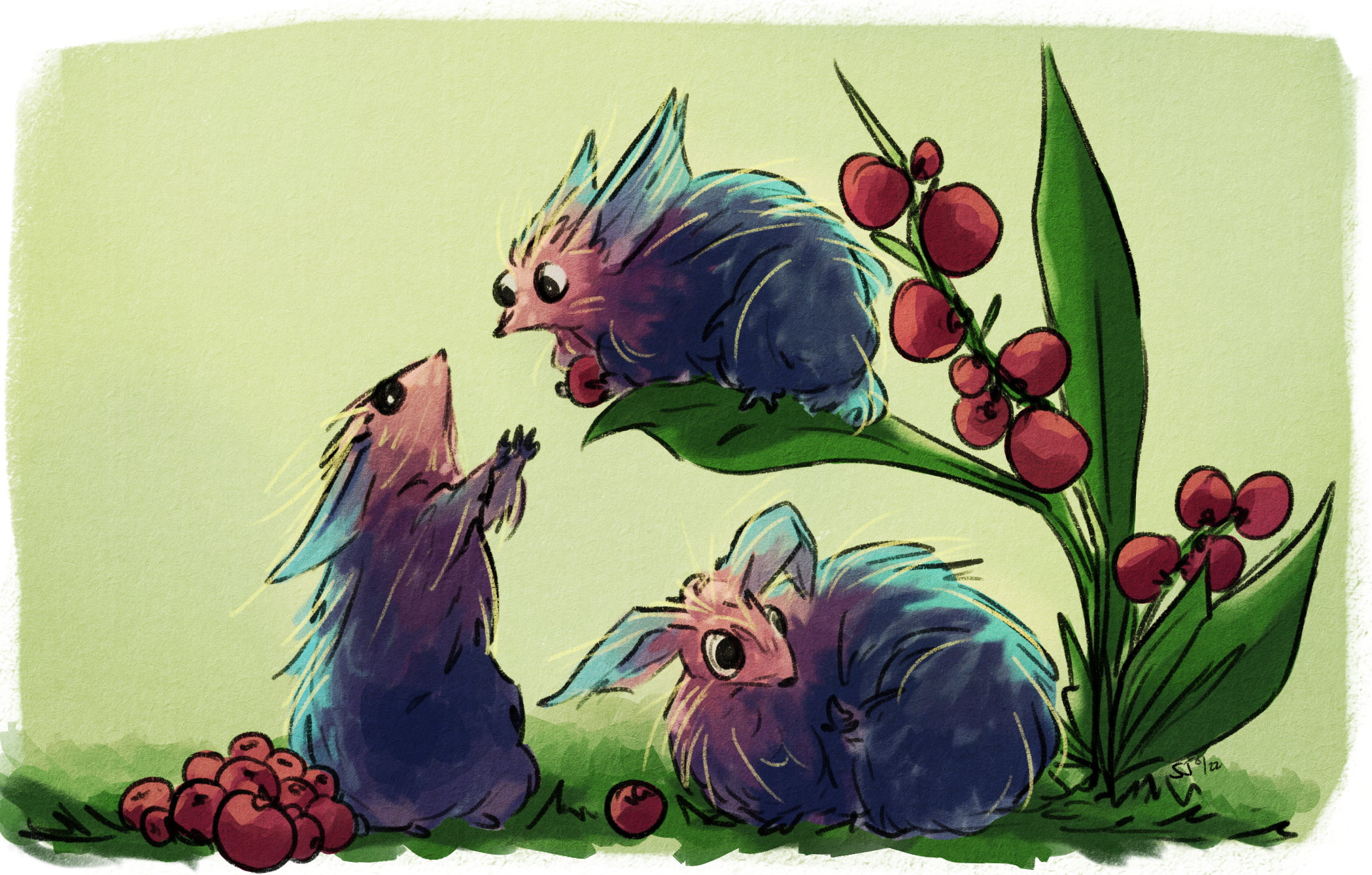
Flignogs are small, furred creatures that can usually be found in trees, grasslands, and caves. They often band together in small tribes, and are known to "bray" at each other to communicate. They are omnivores and spend much time hunting small animals and gathering fruit. They have also grown to enjoy the "brayberries" of the braytree, which flignogs often collect and bury in secret troves for later.
Release Date August 07, 2022
Sign up for a free account to claim this creature as your own.

by ninja
♥ 5

Discover other creatures

Explore an endless universe of ficticious life on NovelGens.

UNCOMMON

#041 Weiffalo

Weiffalo produce a seasonal wool that is as light as clouds. When Weiffalo have thick, natural coats, they love to ride strong gusts of wind around open fields, often bumping into each other both in the air and upon landing. Weiffalo also love to ...

COMMON

#077 Fring

Frings are a species with the ability to change their size at will. Permanent aspects of their society like their homes and businesses are incredibly tiny and can only be seen or used while they're their smallest size, but they often size up when ...

COMMON

#315 Tableu

Tableu are artificial, lab-designed mammal-likes that were designed for domestication into dense populace housing. Tableu are known for their eponymous "table", a hardened appendage on top of their head that they perpetually hold perfectly paralle...

COMMON

#265 Trogurp

Trogurps are small, brightly-colored insects that are typically found in the forests of the world. They eat leaves and other plant matter and are covered in a thick chitinous shell. Male trogurps can be aggressive towards one another and will duel...

UNCOMMON

#334 Xolgar

Xolgars are giant birds native to tropical islands. When they hunt, they will pick up a strip of bark from a tree and carry it in their beaks, which they then use to create a makeshift hardnet to trap fish in the water. Once a fish has been caught...

UNIQUE

#374 Panileaf

A rare incubating leaf. When hatched, it's roots suck up all the nutrients in the soil and destroys the plants around it. These plants hatch a hundred years after they are taken out of their mother plant. The size of the leaves depends on how fa...