RARE

#118 Herenella

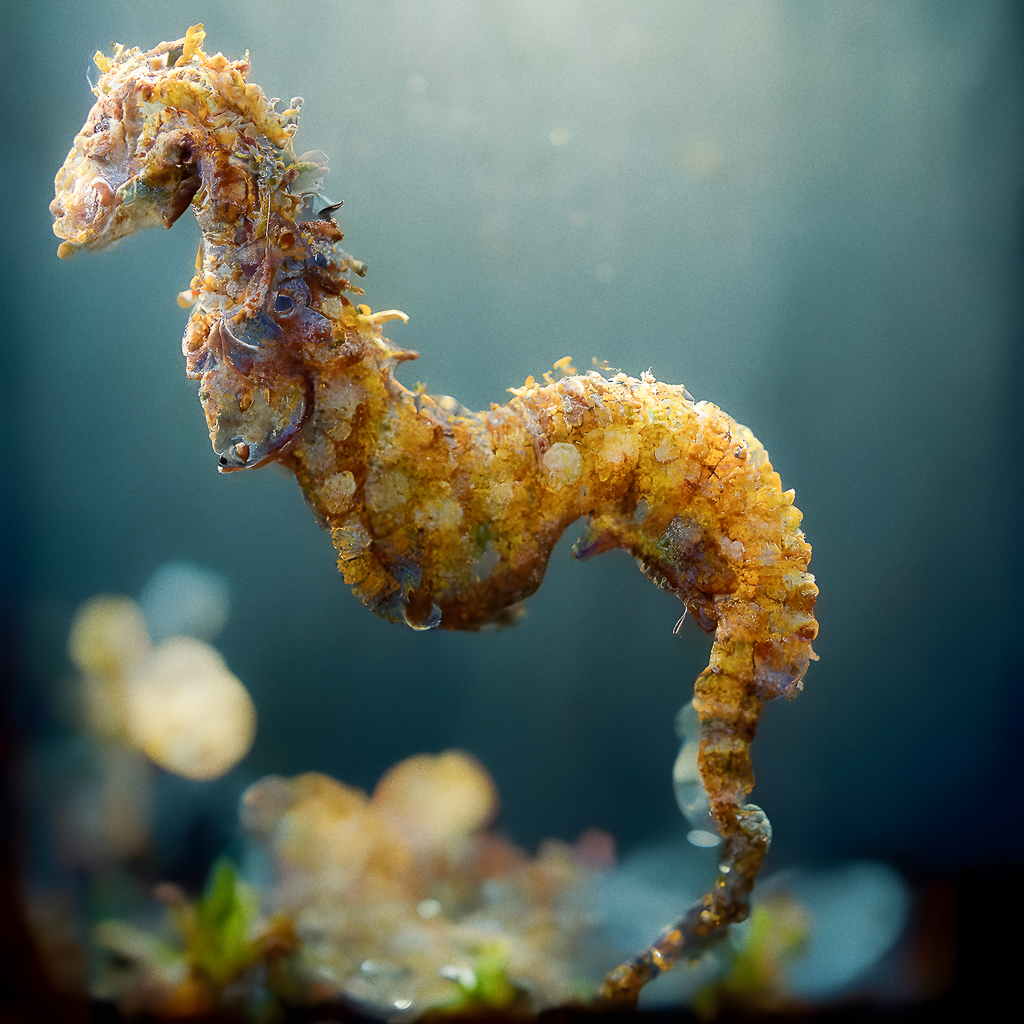
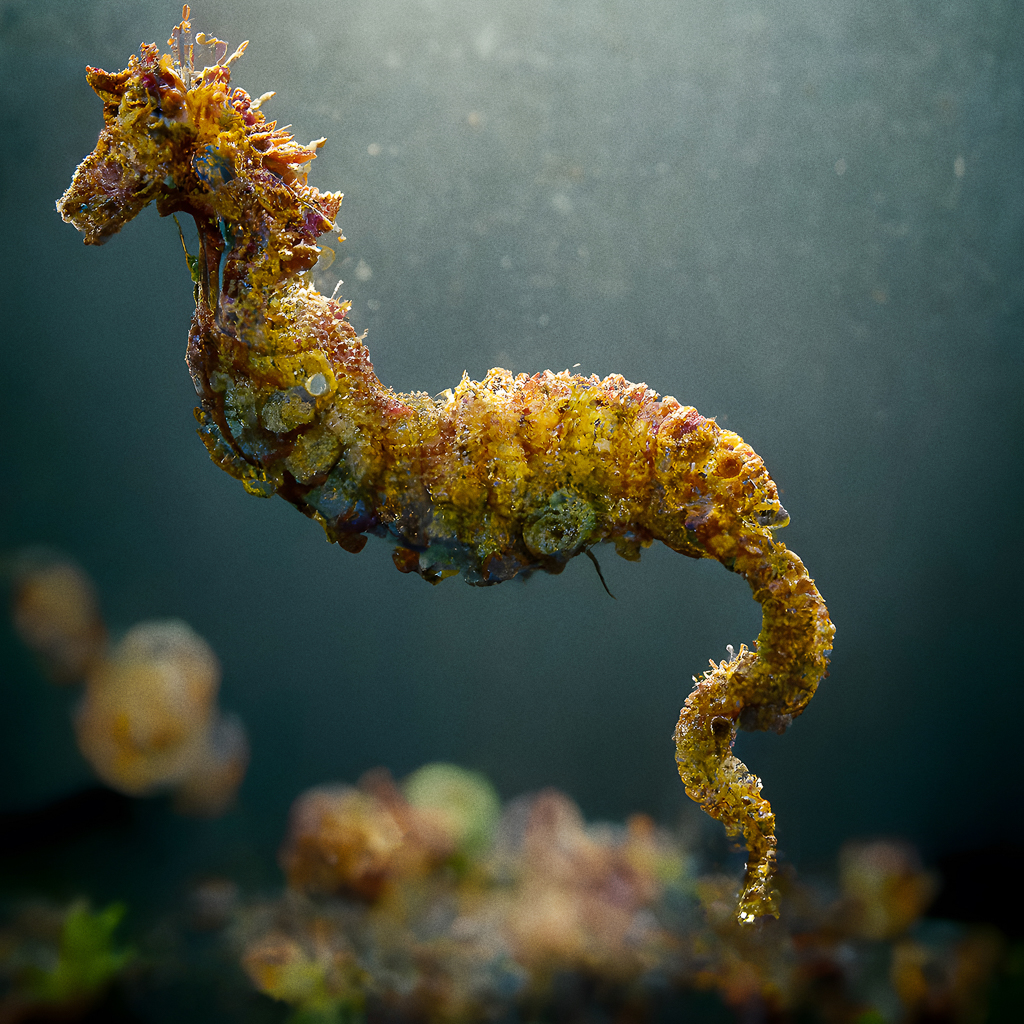
Herenellas are seahorse-like creatures whose bodies form non-euclidean shapes. They feed on ambient temperature differences deep in the ocean. These creatures are very intelligent and will often be found in tight clusters of dozens to hundreds. Herenellas use their long, malleable snouts to communicate with each other, forming a complex language that uses matter-shifting for intonation. While herenellas can also breathe out of water, they rarely have any reason to leave their food source in the ocean depths.

Found in
Release Date April 24, 2022
Sign up for a free account to claim this creature as your own.

♥ 1

♥ 1

Discover other creatures

Explore an endless universe of ficticious life on NovelGens.

UNCOMMON

#131 Phembluf

Phemblufs are large, blue fish that live in the deeper, frozen parts of the northern oceans. Phemblufs average two to three feet long and have a long black, snout with a mouth full of razor-sharp teeth that can drill through ice with ease. Phemblu...

COMMON

#053 Electrofly

Electroflies are gaseous clusters of friendly, intelligent sublife that often physically get caught in airwave currents or magnetic fields, scattering the cluster in a perpetual cycle of trying to reform the cluster's desired shape and structure, ...

UNCOMMON

#059 Croixstel

Croixstel are large bull-like creatures that produce an incredibly-thick coat of fur, which simultaneously makes most croixstel completely impervious (and unaware) of any and all physical contact, but also ultimately results in an inevitable death...

UNIQUE

#241 Witango

Witango are large, sturdy crystalline beasts that spend most of their days laying down and enjoying a warm bath in temperate swampwater. They have a hard time getting out of their baths because they are so comfortable, so they employ the help of t...

COMMON

#243 Banabat

Banabats are small, flying creatures of the night best known for their bright yellow coloring and unique reproduction cycle. Banabats are friendly to most species and primarily feed on tree sap by using their sharp teeth to pierce deep holes throu...

RARE

#191 Sabbi san

Sabbi san are a phylum of four-legged microscopic tardigrades first described by Austrian zoologist Robby Saab in 2195, who discovered them in a tainted cave water sample. Sabbi sans move quickly in water or on land with a gait that closely resemb...